County Integrated Development Plan: The Roadmap Every County Needs to Thrive
If you’ve ever wondered why some counties seem to have their act together—better roads, functioning hospitals, reliable water—while others struggle year after year, the answer often comes down to one document: the county integrated development plan. It sounds bureaucratic, sure, but it’s actually one of the most powerful tools a county has for turning promises into projects. Think of it as a five-year roadmap that tells everyone, from the governor’s office to the average citizen, exactly where the county is headed and how it plans to get there.
This article digs into what a county integrated development plan actually is, why it matters so much, and how ordinary residents can use it to hold their leaders accountable. We’ll walk through the planning process, common pitfalls, real-world examples, and practical steps you can take if you want your voice heard. By the end, you’ll understand why this single planning document can make or break a county’s development trajectory.
What Exactly Is a County Integrated Development Plan?
A county integrated development plan, often shortened to CIDP, is essentially a strategic blueprint. It lays out a county’s priorities, budget allocations, and development goals over a five-year period. Unlike a vague wish list, the CIDP is grounded in data—population statistics, economic indicators, infrastructure gaps, and citizen feedback gathered through public participation forums.
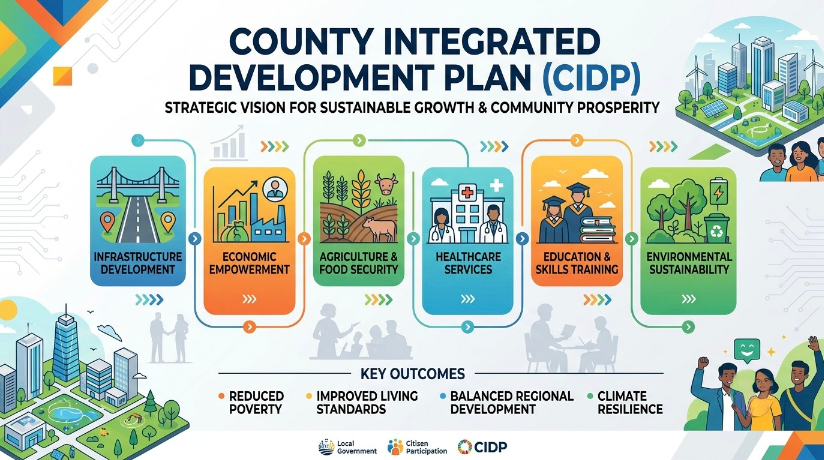
What makes this plan “integrated” is its attempt to weave together multiple sectors at once. Health, education, agriculture, water, transport, and trade don’t operate in silos in real life, so the plan tries to coordinate them so resources aren’t wasted on duplicate or conflicting projects. For instance, if a county wants to boost agricultural output, the plan might also address rural road access and irrigation infrastructure in the same breath, since one without the other accomplishes very little.
Counties typically develop these plans in alignment with national development frameworks, ensuring local priorities still support broader national goals. That alignment matters because it often determines whether a county receives certain grants or development funding. Without an approved, well-structured CIDP, counties can find themselves locked out of opportunities that better-prepared neighbors snap up.
Why “Integrated” Is the Operative Word
The term “integrated” isn’t just jargon thrown in to sound impressive. It reflects a deliberate shift away from piecemeal, department-by-department planning toward something more holistic. Picture a county where the health department builds a new clinic, but nobody coordinated with the roads department, so the clinic sits at the end of an impassable dirt track during rainy season. That’s the exact scenario integration is meant to prevent.
A genuinely integrated plan forces departments to talk to each other before the budget gets locked in. It also pulls in private sector input, civil society organizations, and everyday residents so the final document reflects more than just government assumptions about what people need. This cross-pollination tends to produce more realistic, durable outcomes than plans drafted behind closed doors.
Why a County Integrated Development Plan Matters So Much
You might ask: why does any of this matter to someone who isn’t a policy wonk? Well, the county integrated development plan directly shapes whether your taxes fund a new market shed, a borehole, or yet another stalled construction site with a faded signboard. It’s the document that translates abstract budget figures into tangible projects you can actually see and use.
Beyond the visible projects, the plan also influences how counties attract investment. Investors, whether local entrepreneurs or international firms, want predictability. A clear, well-executed CIDP signals that a county knows where it’s going and has a credible plan to get there. Counties with chaotic or outdated plans tend to scare off serious investment, since nobody wants to build a factory next to a road that may or may not get paved.
There’s also an accountability angle that’s easy to overlook. Once a CIDP is published, residents have a benchmark to measure performance against. If the plan promised three new health centers by year three and none have materialized, that’s a legitimate, documented grievance citizens can raise at public forums or through their elected representatives. Without the plan, those promises would just be vague campaign talk, impossible to pin down.
The Ripple Effect on Local Economies
A well-executed county integrated development plan doesn’t just build infrastructure; it kickstarts entire local economies. Take a hypothetical county that prioritizes agro-processing in its plan. Building a single processing facility creates jobs directly, sure, but it also spurs demand for transport services, packaging suppliers, and even small food vendors near the facility gates.
This ripple effect is why economists often talk about development plans in terms of multipliers rather than isolated line items. Every shilling, dollar, or rupee spent wisely tends to generate additional economic activity well beyond the original project. Counties that understand this tend to prioritize projects with the broadest possible spillover benefits rather than flashy but isolated showpieces.
How the Planning Process Actually Works
Drafting a county integrated development plan isn’t something a handful of officials do over a weekend retreat. It’s typically a months-long process involving data collection, stakeholder consultations, drafting, public review, and final adoption by the county assembly. Each stage matters, and skipping steps usually shows up later as poorly targeted projects.
The process generally kicks off with a situational analysis. Planners look at existing data on poverty levels, school enrollment, disease burden, road networks, and water access to understand where the county currently stands. This baseline data becomes the foundation for everything that follows, so accuracy here is non-negotiable. Garbage data in means garbage priorities out.
From there, county officials usually hold public participation forums across different wards or sub-regions. These sessions can get lively, with residents voicing frustrations about everything from potholes to unemployment. Good planners treat these sessions as genuine input rather than a box-ticking exercise, since the plans that actually reflect community priorities tend to gain far more public buy-in during implementation.
Turning Feedback Into Priorities
Collecting feedback is the easy part; converting it into a coherent set of priorities is where the real planning skill comes in. Planners have to balance competing demands against limited budgets, which inevitably means some popular requests won’t make the final cut. A county integrated development plan that tries to fund everything ends up funding nothing properly, spreading resources too thin to finish any single project well.
This is where prioritization frameworks come into play, ranking projects by criteria like cost-effectiveness, number of beneficiaries, and alignment with broader county goals. It’s a bit like packing for a trip with a small suitcase: you can’t bring everything, so you choose the items that serve the most purposes. Counties that master this prioritization tend to see fewer abandoned, half-finished projects littering the landscape.
Once priorities are set, the plan moves to drafting, where technical teams translate broad goals into specific, costed projects with timelines and responsible departments. This stage often involves financial modeling to ensure the ambitions match realistic revenue projections, because an overly optimistic plan is really just a wish list dressed up in technical language.
Common Challenges Counties Face
Even the best-intentioned county integrated development plan can run into trouble during implementation. Funding shortfalls are probably the most common culprit. Counties often plan based on optimistic revenue projections, only to find actual collections falling short, forcing painful cuts or delays to projects residents were promised.
Capacity gaps present another persistent headache. Drafting an ambitious plan is one thing; having the technical staff, project managers, and procurement expertise to execute it is another matter entirely. Smaller or newer counties sometimes struggle here, watching well-designed projects stall simply because nobody had the bandwidth to manage tendering processes efficiently.
Political turnover can also derail even solid plans. When new leadership comes in, there’s sometimes a temptation to abandon a predecessor’s plan entirely and start fresh, even if the original document was sound. This kind of churn wastes both time and money, and it leaves residents wondering whether any plan will ever actually stick around long enough to be finished.
The Coordination Problem
Coordination failures deserve their own mention because they’re so common and so avoidable. Departments within the same county government sometimes operate like separate fiefdoms, each pursuing its own agenda with minimal communication. A water department might dig trenches for new pipes right after the roads department resurfaces the same street, an utterly preventable waste that happens more often than you’d think.
Solving this requires genuine institutional discipline, not just good intentions on paper. Some counties have tackled this by creating cross-departmental planning committees that meet regularly throughout the year, not just during the CIDP drafting season. This ongoing coordination tends to catch conflicts before they turn into expensive mistakes on the ground.
Real-World Lessons from Successful Counties
Looking at counties that have executed their integrated development plans well offers useful lessons for everyone else. One recurring pattern is strong leadership commitment from the top, where the governor or county executive actively champions the plan rather than delegating it entirely to technical staff and forgetting about it.
Another pattern involves transparent public reporting. Counties that publish regular progress updates, even when results are mixed, tend to maintain higher public trust than those that go silent after the initial launch. Residents generally appreciate honesty about delays far more than they appreciate silence followed by excuses.
A smaller but telling example involves counties that invested early in local data systems. Having reliable, locally generated data made it far easier to track progress against the county integrated development plan’s targets, rather than relying on outdated national statistics that didn’t capture local nuances. This investment in data infrastructure paid dividends well beyond the planning cycle itself.
Lessons from Less Successful Attempts
It’s just as instructive to look at where things went sideways. Some counties have produced beautifully written plans that essentially gathered dust because implementation budgets never materialized. The lesson here is straightforward: a plan without a credible financing strategy is little more than an aspirational document, however polished it might look on paper.
Other counties stumbled by over-promising during public participation forums, telling residents everything they wanted to hear without honestly weighing trade-offs. When reality hit and only a fraction of promised projects got funded, public trust took a serious hit. Honest, realistic communication during planning, even when it disappoints some groups, tends to serve counties better in the long run.
How Citizens Can Engage With the Process
Here’s the part that often gets overlooked: ordinary residents have real power to shape a county integrated development plan, but only if they show up and engage. Public participation forums are typically advertised through local radio, notice boards, and county websites, so it pays to stay alert for announcements, especially during the months leading up to a new planning cycle.
Showing up isn’t enough on its own, though. Coming prepared with specific, well-articulated concerns tends to carry more weight than general complaints. Instead of simply saying “we need better roads,” it helps to specify which road, why it matters, and how many people it affects. Planners juggling dozens of competing requests respond better to concrete, actionable input.
Beyond formal forums, residents can also engage by reviewing draft plans once they’re published, which counties are generally required to do before final adoption. Reading through a draft might sound tedious, but spotting a glaring omission, like a ward with zero allocated projects, before the plan is finalized is far more effective than complaining afterward when budgets are already locked.
Working Through Local Organizations
Not everyone has time to attend every public forum personally, and that’s perfectly understandable given busy schedules. Working through community-based organizations, farmer cooperatives, or local civil society groups offers an efficient alternative. These organizations often have dedicated staff who track the county integrated development plan process closely and can amplify community concerns more systematically than individual residents managing it alone.
These groups also tend to build institutional memory over multiple planning cycles, remembering which promises were kept and which fell through. That historical knowledge proves invaluable when holding county governments accountable, since it’s much harder for officials to quietly drop a commitment when an organized group is keeping track year after year.
Looking Ahead: The Future of County Planning
Technology is gradually reshaping how counties draft and monitor their integrated development plans. Digital dashboards now let some counties track project implementation in near real-time, giving both officials and residents visibility into spending and progress without waiting for annual reports. This shift toward transparency, while still uneven across different counties, represents genuine progress.
Climate considerations are also becoming harder to ignore in planning cycles. Counties that once treated environmental concerns as an afterthought are increasingly weaving climate resilience directly into their core development priorities, recognizing that infrastructure built without climate considerations risks becoming obsolete or damaged within a few short years.
Finally, there’s growing recognition that a county integrated development plan works best as a living document rather than something locked away after adoption. Counties that revisit and adjust priorities based on changing circumstances, without abandoning the overall framework, tend to deliver more relevant results than those rigidly sticking to a five-year-old document regardless of new realities on the ground.
Conclusion: Why This Plan Deserves Your Attention
A county integrated development plan isn’t just paperwork buried in a government office somewhere. It’s the document that determines whether your local clinic gets built, whether your road finally gets paved, and whether your county attracts the kind of investment that creates lasting jobs. Understanding how these plans work, and actively engaging with the process, puts real power back in the hands of residents rather than leaving everything to officials operating with minimal oversight.
The counties that get this right share common traits: strong leadership, honest public communication, solid data, and genuine cross-departmental coordination. The ones that struggle usually fall short in one or more of these areas, often due to funding gaps or political churn rather than a lack of good intentions. Either way, the gap between a polished plan and real results almost always comes down to execution, not ambition.
If there’s one actionable takeaway here, it’s this: don’t wait for the next election cycle to start paying attention. Find out when your county’s next public participation forum is scheduled, show up with specific concerns, and follow the progress reports once the plan is adopted. A county integrated development plan only works as well as the people pushing it forward, and that includes you.
Frequently Asked Questions
1. What is the main purpose of a county integrated development plan?
Its main purpose is to guide a county’s development priorities and budget allocations over a five-year period, ensuring projects across different sectors work together rather than in isolation.
2. How often is a county integrated development plan updated?
Most counties draft a new plan every five years, though many also conduct annual or mid-term reviews to adjust priorities based on changing circumstances and progress so far.
3. Can ordinary citizens influence the county integrated development plan?
Yes, citizens can influence it through public participation forums, written submissions during the draft review period, and by engaging local community organizations that track the planning process.
4. Why do some county integrated development plans fail to deliver results?
Common reasons include unrealistic revenue projections, weak technical capacity, political turnover, and poor coordination between departments, all of which can derail even well-designed plans.
5. How can I find out what projects are planned for my area?
Most counties publish their integrated development plan documents on official county websites, and summaries are often shared during public forums or through local radio announcements.




Post Comment