Martie Allen and the Quiet Art of Staying Out of the Spotlight
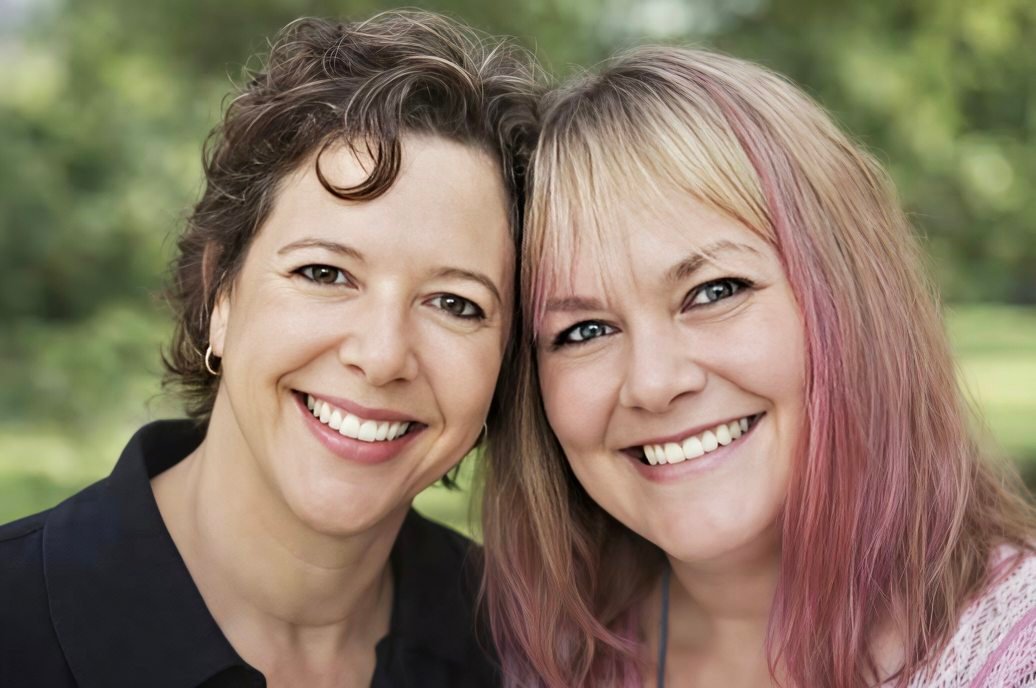
If you’ve searched for “Martie Allen” recently, you’ve probably noticed something strange. Half a dozen articles claim to know her birth year, her job title, even her supposed career as a therapist treating bipolar disorder. They just don’t agree with each other. One site says she was born in 1960. Another says 1962. A third insists she’s a licensed marriage and family therapist. A fourth says there’s no verifiable record of her having any entertainment career at all. That’s not a research gap — it’s a tell. When sources contradict each other this badly, it usually means nobody actually checked, they just rewrote each other’s guesses.
So let’s slow down. Martie Allen is a real person, and she does have a real, documented connection to Hollywood — but almost entirely through someone else’s career. She’s the longtime partner of Kristy McNichol, the Emmy-winning actress best known for Family and Empty Nest. Beyond that one verified fact, the public record is thin, and Allen has clearly preferred it that way for more than three decades. That choice, as it turns out, says something interesting all on its own about fame, privacy, and what we actually owe to people who never asked to be famous in the first place.
What’s Actually Known About Martie Allen
| Fact | Status |
|---|---|
| Known publicly as | Partner of actress Kristy McNichol |
| Relationship began | Early 1990s |
| Relationship made public | January 2012, when McNichol came out |
| Profession | Not independently verified |
| Birth year | Not consistently or reliably documented |
| Public statements | Rare to none |
| Residence | Los Angeles, California (per McNichol’s interviews) |
That’s it. That’s the whole verified table. Notice how short it is compared to most “celebrity partner” profiles you’ll find online. That’s intentional, and it’s honest. Anything longer than this, dressed up with a fabricated career timeline or a guessed-at net worth, is filler — the internet equivalent of padding a resume with jobs you never had.
Why So Little Is Confirmed
McNichol stepped away from acting around 2001, right around the time her relationship with Allen had already been going strong for nearly a decade. By the time the couple went public in 2012, McNichol had been out of the spotlight long enough that paparazzi interest had cooled considerably. Allen, for her part, never worked in front of a camera in any documented capacity, and she’s never given an interview, written a memoir, or built a public-facing career under her own name.
That combination — a partner who’d already left Hollywood, plus an individual who never sought visibility — created the perfect conditions for privacy. There simply wasn’t a constant stream of red carpets, junkets, or talk show appearances generating photos and quotes. No content means no archive, and no archive means future writers are stuck guessing. Unfortunately, some of them guess in print and call it a biography.
The Marty Allen Mix-Up
Adding to the confusion, there’s a well-documented public figure with an almost identical name: Marty Allen, the comedian and former half of the comedy duo Allen & Rossi, who passed away in 2018 at age 95. He appeared on The Ed Sullivan Show dozens of times and had a genuinely thorough public record, complete with marriages, military service, and film credits. Search engines occasionally blend results between “Martie Allen” and “Marty Allen,” which only deepens the mess of contradictory information floating around. If you ever come across a detailed biography of “Martie Allen” packed with film credits and a Hollywood Squares appearance, you’re probably reading about the wrong person entirely.
There’s a quieter version of this problem too, separate from any name mix-up. A handful of low-effort articles describe Allen as a “marriage and family therapist” who counsels people through bipolar disorder, or as a “former television actress” with specific production credits on named shows. None of that traces back to any primary source — no interview, no professional license registry, no credited filmography. It reads suspiciously like someone noticed McNichol’s own public struggle with bipolar disorder and quietly stitched a matching career onto her partner to make the story feel tidier. That’s not journalism; it’s narrative fan fiction wearing a biography’s clothing, and it’s worth calling out every time it resurfaces.
How Privacy Held for Decades Before Anyone Noticed
One detail that gets lost in the noise is just how long this relationship existed before most people knew it existed at all. McNichol and Allen had already been together for roughly twenty years by the time the relationship became public knowledge. Twenty years is a long stretch to maintain in private, especially for someone who’d once been a recognizable face on national television. It suggests a level of discipline and mutual agreement that goes well beyond simply avoiding a few photographers.
Consider what that actually requires in practice. It means turning down certain interview questions for two decades. It means not bringing a plus-one to industry events, or bringing one without ever confirming who they are. It means trusting that friends, colleagues, and even extended family won’t leak the obvious. That’s not an accident of circumstance; it’s a sustained, joint decision renewed year after year, long before anyone was applauding them for it.
The Connection to Kristy McNichol
Kristy McNichol’s career, by contrast, is extremely well documented. She’s an American former actress who rose to fame in 1976 playing Letitia “Buddy” Lawrence on the TV drama Family, a role that earned her two Emmy Awards. She later took on roles including Angel in Little Darlings, Polly in Only When I Laugh, and Barbara Weston on the sitcom Empty Nest, before retiring from acting in 2001. She also started a singing career, though an ongoing battle with bipolar disorder eventually affected her output and led her to leave Empty Nest before it ended.
McNichol’s relationship with Martie Allen is where the two names intersect, and it’s genuinely one of the more meaningful coming-out stories in Hollywood history. McNichol has lived with her partner Martie Allen since the early 1990s, though she didn’t publicly confirm the relationship until 2012. By that point, the two had quietly built a life together for roughly two decades without a single tabloid headline forcing the issue. That’s almost unheard of for anyone connected, even loosely, to a former teen idol.
Why McNichol Came Out When She Did
McNichol didn’t come out for attention — she’d already left the industry over a decade earlier. After retiring from acting in the late 1990s, McNichol shared some very personal news with the media in 2012, hoping that her public acknowledgement of her sexuality would help others. That motivation matters here. She wasn’t trying to generate buzz for a comeback or promote a project. She was a private citizen who decided that her story, including her relationship with Allen, might do some good for kids who were struggling with their own identity.
It’s worth pausing on how rare that is. Plenty of celebrities come out alongside a memoir, a docuseries, or a carefully timed magazine cover. McNichol did it with a short statement and then went right back to her quiet life. Martie Allen, throughout all of it, never stepped forward to claim any part of the spotlight for herself. She let McNichol’s announcement be McNichol’s, and that restraint has held for over a decade since.
Why Some Celebrities Choose to Keep Partners Private
Martie Allen isn’t an outlier here — she’s part of a long, quiet tradition. Plenty of well-known people have deliberately kept the person they love out of the public eye, sometimes for years, sometimes forever. The reasons vary, but a few patterns show up again and again.
Protecting the Relationship Itself
Actor Tom Holland has spoken candidly about this. He’s said that one of the downsides of fame is that privacy isn’t really in your control anymore, and a private moment between two people who love each other becomes something shared with the entire world the second it’s photographed. That’s a fair point, and it explains a lot. Imagine trying to have a normal argument, a normal reconciliation, or even a normal boring Tuesday dinner while strangers are dissecting your body language for clues. Plenty of couples have decided that’s simply not a trade worth making, even when the fame is unavoidable for one partner.
Robert Pattinson made a similar argument about his relationship with Suki Waterhouse, pointing out that being asked about your relationship by a total stranger would feel rude in almost any other context. Somehow, when a microphone is involved, that rudeness gets reframed as journalism. Pattinson’s framing cuts right through that. Privacy isn’t secrecy for its own sake; it’s just normal boundary-setting that famous people have to defend more actively than the rest of us.
Protecting the Non-Famous Partner
Here’s where Martie Allen’s situation really stands out. When both halves of a couple are famous, there’s at least a shared understanding of what public life costs. But when one partner has no entertainment career and no interest in building one, dragging them into headlines can feel genuinely unfair. They didn’t sign up for paparazzi outside their house or strangers analyzing their relationship status on a Wikipedia talk page.
Think of it like a spotlight at a theater. The performer chose to stand under it, rehearsed for it, gets paid because of it. Someone in the front row who just came to watch didn’t agree to be lit up too. Allen has spent more than thirty years quietly sitting in that front row, and by all appearances, she’s never asked to be handed a script.
Protecting Children and Family Life
This pattern shows up constantly with celebrities who have kids. Eva Mendes has said she won’t post images of her daughters until they’re old enough to give their own consent, even though she’s been with Ryan Gosling, one of the most photographed actors alive, since 2011. Jennifer Lawrence has expressed something nearly identical, saying every instinct in her body wants to protect her child’s privacy for as long as she possibly can. Dolly Parton and her husband Carl Thomas Dean took the privacy instinct even further, staying together for over fifty years while almost completely avoiding red carpets as a pair.
None of these are identical situations to Allen and McNichol’s, but the underlying instinct is the same: love doesn’t need an audience to be valid, and sometimes it’s actually healthier without one. Fame is often treated like an unavoidable tax on a relationship. These couples, Martie Allen included, simply decided not to pay it.
When Privacy Outlasts the Fame Itself
There’s also a category of couple where privacy isn’t really a strategy at all anymore — it’s just how the relationship has always worked, long after the spotlight has faded. Dolly Parton’s marriage is the clearest example most people know. She and Carl Thomas Dean were married for over fifty years, and in all that time, only a handful of photos of the two together ever circulated. Parton has joked about the rarity of those photos herself, treating the mystery with the same warmth she brings to everything else. Nobody seriously doubts the marriage was real or happy. It just never needed public proof to function.
McNichol and Allen fit comfortably into that same category, maybe even more so. McNichol wasn’t actively performing for most of the relationship’s existence, which meant there was no ongoing publicity machine generating opportunities for the couple to be seen together. Once McNichol made her statement in 2012, there was no follow-up media tour, no joint photoshoot, no carefully staged “first official appearance as a couple.” The announcement itself was the whole event, and then life simply continued as it had for the previous twenty years. That kind of consistency is rare, and it’s arguably more telling than any tabloid headline could ever be.
There’s a broader lesson buried in all this, and it’s bigger than one couple. A huge amount of content about private partners of public figures isn’t actually reporting — it’s reasonable-sounding invention dressed up as fact. Writers under pressure to produce a “complete biography” of someone with almost no public record will quietly fill in gaps: a birth year here, a career history there, a charitable cause that sounds plausible. Multiply that across a dozen competing websites, and you get exactly what a search for “Martie Allen” turns up today — confident-sounding articles that flatly contradict each other.
The responsible move, when a subject genuinely hasn’t shared details about their life, is to say so plainly instead of manufacturing a backstory. It’s less satisfying than a tidy biography with a birthdate and a career arc, sure. But it’s accurate, and accuracy matters more than completeness when you’re writing about someone who never agreed to have their life documented at all. Martie Allen chose privacy. The least the internet can do is respect that choice rather than papering over it with guesswork.
Conclusion
Martie Allen’s story, such as it is, boils down to a few solid facts wrapped in a lot of unreliable noise. She’s been Kristy McNichol’s partner since the early 1990s, the relationship became public in January 2012, and beyond that, very little about her has been independently confirmed. That’s not a failure of research; it’s the natural result of someone who has consistently chosen to stay out of public life and a partner who respected that choice even while sharing her own coming-out story.
The bigger takeaway here applies well beyond this one couple. Plenty of well-known people, from Tom Holland to Eva Mendes to Dolly Parton, have decided that some parts of love simply aren’t meant for headlines. If you’re trying to learn about a private partner like Martie Allen, the most useful thing you can do is treat thin information as a signal of respect, not a gap to be filled with speculation. And if you’re someone navigating your own relationship in or near public life, her example is a quiet but solid one: you don’t need an audience to validate thirty-plus years of commitment. Sometimes the strongest relationships are the ones nobody gets to watch.
FAQS
1. Who is Martie Allen?
Martie Allen is best known as the longtime partner of Emmy-winning actress Kristy McNichol. Beyond that connection, very little about her has been independently verified — she’s never given interviews, confirmed a profession, or shared personal details publicly.
2. When did Martie Allen and Kristy McNichol get together?
The couple has been together since the early 1990s. They kept the relationship entirely private for roughly two decades before it became public knowledge in 2012.
3. Did Martie Allen work in the entertainment industry?
There’s no verified record of this. Some online articles claim she had a production or acting career, but none of these claims trace back to a credible primary source, so they should be treated as unconfirmed.
4. Why did Kristy McNichol wait until 2012 to confirm the relationship?
McNichol had already retired from acting over a decade earlier, so there wasn’t industry pressure driving the timing. She’s said she came out hoping it might help others, particularly young people, who were struggling with their own identity.
5. Is “Martie Allen” the same person as comedian Marty Allen?
No. Marty Allen was a well-known comedian and actor (half of the duo Allen & Rossi) who died in 2018. The similar name causes frequent confusion online, and some “Martie Allen” biographies mistakenly pull details from his life.


Post Comment