Best Sonso Yuca Near Me: Crispy Cheesy Bolivian Snack Guide
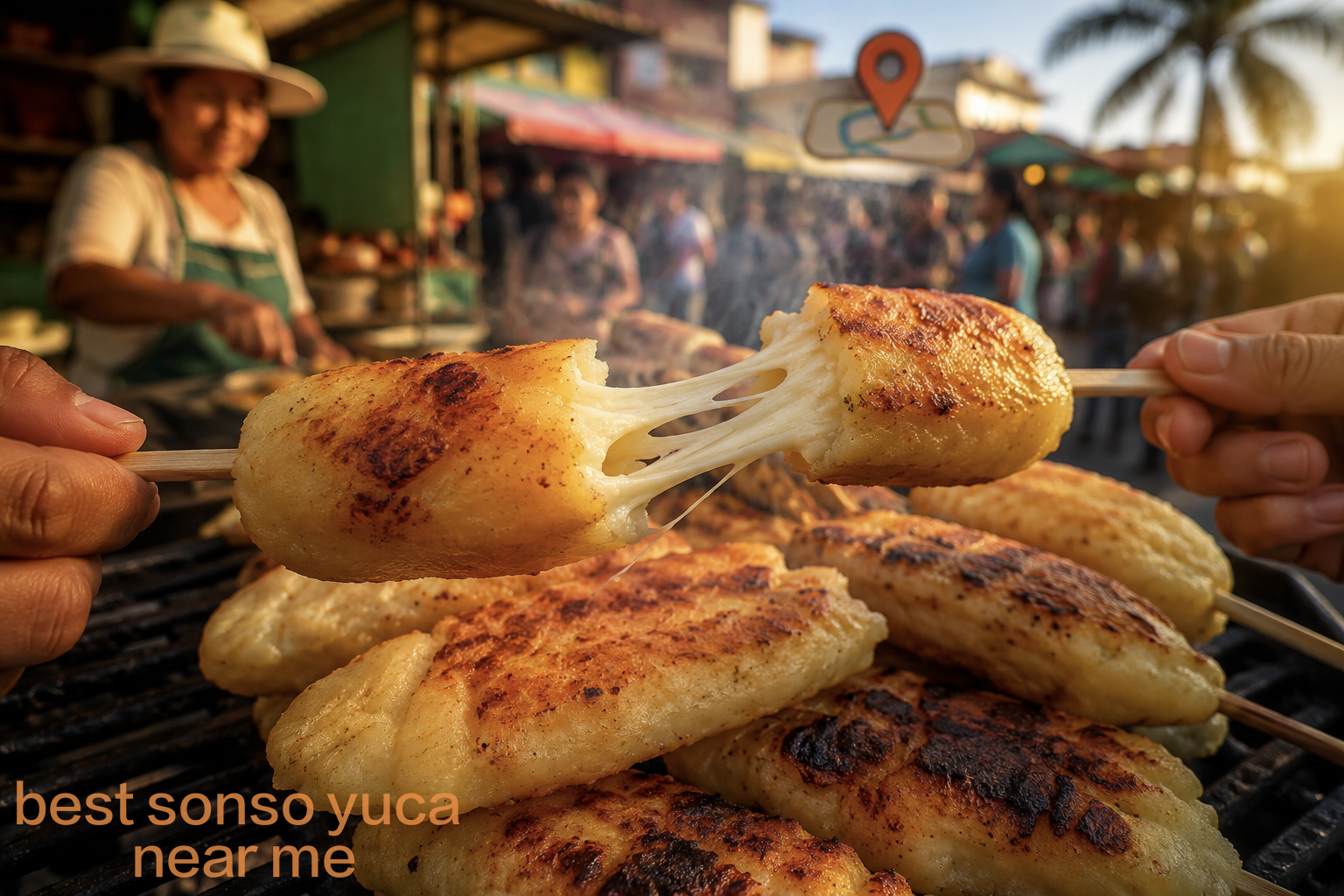
So you typed “best sonso yuca near me” into your phone at 9 p.m., stomach growling, and got… not much. You’re not alone. This dish hasn’t gone mainstream yet, and that’s exactly why it’s worth the hunt. Sonso de yuca is a Bolivian comfort food built from two humble ingredients — cassava root and melty cheese — that somehow add up to something way more than the sum of its parts. It’s crispy on the outside, soft and stretchy on the inside, and honestly a little addictive once you’ve had it warm off the grill.
This guide walks you through everything: what sonso yuca actually is, why people keep searching for the best sonso yuca near me instead of just settling for whatever’s at the corner taco shop, where you’re most likely to track it down, and — because let’s be real, sometimes “near me” turns up nothing — exactly how to make a restaurant-quality version in your own kitchen. Grab a coffee, because in Bolivia, that’s basically the rule.
What Exactly Is Sonso Yuca?
Sonso de yuca (sometimes spelled “zonzo”) comes from eastern Bolivia, particularly the Santa Cruz, Beni, and Pando regions, where cassava grows like it’s nobody’s business. The name itself is a little funny — “sonso” translates loosely to “silly” or “foolish” in Spanish, which doesn’t sound like a compliment, but nobody seems to mind. The dish earned its quirky nickname generations ago, and it stuck, the way nicknames tend to.
At its core, the recipe is dead simple: boiled cassava gets mashed while still hot, mixed with a generous amount of cheese, butter, and sometimes a splash of milk or an egg, then shaped and cooked one of three ways — grilled over charcoal, baked in the oven, or fried on a griddle like a thick pancake. Each method gives you a slightly different texture, but the soul of the dish stays the same: starchy, mild cassava wrapped around pockets of gooey, salty cheese.
If you’ve never had cassava before, picture a potato that’s a bit sweeter and nuttier, with a denser bite. It’s a blank canvas, really, which is probably why it pairs so beautifully with cheese. Once you understand that base, it starts to make sense why so many people go searching for the best sonso yuca near me the moment they discover this snack exists — it’s comforting in a way that feels both new and oddly familiar, kind of like biting into a savory tres leches.
A Quick Origin Story
Cassava itself has been a staple crop in South America for well over a thousand years, originally domesticated in what’s now southern Brazil before spreading across the continent and eventually the globe. Bolivian families in the eastern lowlands turned it into sonso as an everyday snack, usually served alongside a cup of coffee in the late afternoon or evening — a tradition that’s lasted for generations and shows no signs of fading.
Street vendors in Santa Cruz often grill the dough on long bamboo skewers held over open charcoal, which adds a smoky depth you just can’t replicate in an oven. That said, plenty of home cooks bake or fry their sonso instead, especially outside Bolivia where charcoal grilling on a skewer isn’t exactly practical in a city apartment. Either way, the result lands somewhere between a savory pancake and a cheese-stuffed dumpling, and it’s hard not to fall for it on the first bite.
Why “Best Sonso Yuca Near Me” Is Trending in Food Searches
It’s not an accident that more people are typing the best sonso yuca near me into search bars these days. Latin American street food has been having a moment for a while now, and cassava-based snacks are riding that wave right alongside arepas, pupusas, and empanadas. Food bloggers and home cooks on social media have started sharing sonso videos, and the visual payoff — that slow cheese pull when you tear a piece apart — is exactly the kind of thing that travels fast online.
There’s also a practical angle here. A lot of folks are cutting back on gluten, and cassava happens to be naturally gluten-free, which makes sonso yuca a genuinely solid option for anyone managing a sensitivity or just trying to eat a little differently. Unlike a lot of gluten-free substitutes that feel like a compromise, sonso doesn’t taste like it’s missing anything. It tastes like what it is: cheese and root vegetable, done right.
Think about the way pretzel-crusted snacks or loaded potato skins built a fanbase simply through word of mouth and a satisfying bite. Sonso yuca is following a similar path, just with a Bolivian accent. People try it once at a friend’s house or a pop-up market, and suddenly they’re the ones asking everyone else about the best sonso yuca near me, hoping someone has a lead.
The Comfort Food Factor
There’s a reason comfort foods cross borders so easily — warm, cheesy, carb-heavy dishes hit the same emotional notes no matter where you’re from. Mac and cheese, poutine, queso fundido, and now sonso yuca all scratch a similar itch. They’re not fancy. They’re not trying to be. They just deliver warmth and satisfaction in a way that feels almost nostalgic, even if you’re trying it for the very first time.
That emotional pull matters more than people give it credit for when a dish starts spreading beyond its home country. Nobody goes viral searching for the best sonso yuca near me because of the nutrition label. They’re chasing a feeling — the smell of something grilling, the anticipation of that first cheesy bite, the comfort of a snack that reminds them of someone’s grandmother’s kitchen even if it’s not their own grandmother.
Where to Actually Find the Best Sonso Yuca Near Me
Here’s the honest truth: sonso yuca hasn’t fully broken into mainstream restaurant menus the way tacos or empanadas have, so finding it takes a slightly different approach than your average food search. If you genuinely want the best sonso yuca near me, your best bet usually isn’t a generic search at all — it’s getting specific about where Bolivian and broader South American communities tend to gather and eat.
Start with Bolivian restaurants directly, since that’s where you’re most likely to see sonso listed by name on the menu. Cities with sizable Bolivian populations — places like Arlington and Falls Church in Virginia, parts of Los Angeles, and pockets of New York and New Jersey — tend to have small, family-run spots that serve traditional dishes you won’t find at bigger Latin fusion chains. These restaurants don’t always have flashy marketing, so checking recent reviews and photos on map apps can reveal a sonso dish that isn’t even mentioned in the written description.
Checking Local Markets and Pop-Ups
Weekend markets and cultural festivals are honestly underrated when you’re hunting for the best sonso yuca near me. Bolivian and Peruvian cultural associations frequently host food fairs, and vendors there will often sell homemade sonso alongside salteñas and other regional snacks. These events rotate locations and dates, so following local Latin American community pages on social media tends to pay off more than relying on a single restaurant search.
It’s a bit like hunting for the best tamales during the holidays — sometimes the real gems aren’t sit-down restaurants at all, but a folding table outside a church or a stand at a farmers market that only shows up once a month. Ask around in community Facebook groups or neighborhood apps; somebody almost always knows somebody’s aunt who makes it better than any restaurant could.
Asking Specialty Grocery Stores
South American grocery stores, especially ones that stock fresh or frozen cassava, are another solid lead. Staff at these shops often know exactly which nearby restaurants or home cooks sell sonso, since the customer base overlaps heavily. A short conversation with the cashier can sometimes get you further than twenty minutes of scrolling through search results for the best sonso yuca near me.
If your area genuinely doesn’t have any Bolivian restaurants or markets nearby, don’t get discouraged. That just means it’s time to bring the dish home yourself, and honestly, that’s where the real fun starts anyway.
How to Make Restaurant-Quality Sonso Yuca at Home
If the search for the best sonso yuca near me keeps coming up empty, making it yourself is genuinely the better move. It’s not a complicated recipe, and once you nail the basic ratio, you’ll wonder why you didn’t try it sooner. The whole process takes under an hour, most of which is just waiting for the cassava to boil.
You’ll need fresh or frozen cassava root, peeled and cut into chunks, plus a generous amount of melting cheese — mozzarella works well, and mixing in a salty cheese like queso fresco adds depth. Add butter, a splash of milk, and salt to taste, and that’s genuinely most of the ingredient list. No exotic spices, no hard-to-find pantry items, just good basic groceries.
Step-by-Step Preparation
Peel the cassava and cut it into manageable chunks, then boil it in salted water for around 30 to 40 minutes, until it’s tender enough to pierce easily with a fork. While it’s still hot, mash it thoroughly and remove any tough, fibrous core that didn’t soften during cooking — skipping this step is the most common reason homemade sonso ends up stringy instead of smooth.
Once mashed, mix in butter and milk while the cassava is still warm, since this prevents lumps from forming and helps everything bind together. Fold in your cheese until you’ve got a soft, slightly sticky dough, then shape it into small discs or balls. From there, you’ve got three options: bake at around 375°F until golden, fry the patties in a lightly buttered pan for a minute or two per side, or thread the dough onto skewers and grill it for that smoky, street-food flavor.
A lot of home cooks find that a roughly equal ratio of cheese to mashed cassava gives the best texture — enough cheese for that signature pull, without so much that it oozes out and burns during cooking. It’s a small detail, but it makes a noticeable difference between a sonso that holds together nicely and one that falls apart on the plate.
Common Mistakes to Avoid
One mistake people make is letting the cassava cool down completely before mashing it, which leads to a lumpy, uneven texture that’s hard to fix later. Mash it while it’s hot, even if that means working a little faster than you’d like.
Another issue is using a cheese that doesn’t melt well. Stick to fresh mozzarella, mild cheddar, or a queso fresco blend rather than pre-shredded cheese loaded with anti-caking agents, since those tend to turn grainy instead of gooey when heated.
Pairing Sonso Yuca With the Right Drinks and Sides
Traditionally, sonso de yuca is served with a simple cup of coffee, often in the late afternoon as a kind of mid-day pick-me-up. There’s something charming about that pairing — a savory, cheesy snack alongside something bitter and warm, almost like the Bolivian answer to tea and biscuits.
If you’re serving it as part of a bigger spread, a tangy salsa or a spicy condiment like Bolivian llajwa cuts through the richness nicely. A simple tomato and onion salad on the side also works well, since the acidity balances out all that cheese without competing with it. Pairing it with a cold horchata or a citrusy agua fresca makes for a great contrast too, especially if you’re serving sonso at a warm-weather gathering.
Turning It Into a Full Meal
Sonso yuca doesn’t have to stay a snack. Pair it with grilled meats, roasted vegetables, or a fresh green salad, and suddenly it’s holding its own as a side dish at dinner. Some families even serve it alongside scrambled eggs for a hearty breakfast, treating it almost like a savory hash brown with a cheesy twist.
If you’re hosting friends who’ve never tried Bolivian food before, sonso yuca is a low-risk, high-reward way to introduce them to it. It’s familiar enough — cheese and starch, nothing scary — that even picky eaters tend to come around after one bite.
The Health Angle: Is Sonso Yuca Actually Good for You?
It’s fair to wonder whether something this cheesy and indulgent has any redeeming nutritional value, and the answer is a cautious yes. Cassava itself is naturally gluten-free, making sonso a solid option for people avoiding wheat, and it’s a complex carbohydrate that releases energy more steadily than refined sugar-heavy snacks.
Cassava also brings some vitamin C and dietary fiber to the table, along with a handful of antioxidants. That said, the cheese and butter mean this isn’t exactly a diet food, and that’s perfectly fine — not every dish needs to be. Moderation is the name of the game here, the same way it would be with any cheese-forward comfort food.
If you’re trying to lighten it up slightly, using a reduced-fat cheese or trimming the butter back a bit won’t ruin the dish. The cassava itself does most of the heavy lifting in terms of texture, so you’ve got some wiggle room to adjust the richness based on what you’re looking for.
Final Thoughts: Why the Hunt for Sonso Yuca Is Worth It
At the end of the day, chasing down the best sonso yuca near me is about more than just another food trend. It’s a small window into Bolivian culture, family tradition, and the kind of resourceful, comforting cooking that turns a humble root vegetable into something genuinely craveable. Whether you find it at a tucked-away family restaurant, a weekend cultural market, or you end up making it yourself on a random Tuesday night, the payoff is the same: a warm, cheesy bite that’s hard to stop eating after just one.
If your local search for the best sonso yuca near me keeps coming up empty, don’t give up on the dish entirely. Head to a South American grocery store, grab some cassava, and give the homemade version a shot. It’s forgiving, forgiving enough for a first-timer, and rewarding enough that you’ll likely make it again. And if you do happen to find an authentic spot nearby, treat yourself — and maybe bring a friend who’s never heard of sonso before. Watching someone discover it for the first time is half the fun.
Frequently Asked Questions
1. What does sonso yuca taste like?
Sonso yuca tastes mild, slightly sweet, and nutty from the cassava, balanced against the salty richness of melted cheese. The texture is soft and a little chewy on the inside, with a crisp, golden exterior if it’s grilled or fried.
2. Is sonso yuca the same as yuca fries?
No, they’re different dishes entirely. Yuca fries are simply fried cassava sticks, similar to french fries, while sonso yuca mixes mashed cassava with cheese to form a dough before cooking it into patties or skewers.
3. Can I make sonso yuca ahead of time and freeze it?
Yes, the uncooked dough freezes well for up to a few months. Just shape it into portions, freeze it on a tray first, then transfer to a bag, and cook it straight from frozen or after a quick thaw whenever you’re ready.
4. Where can I buy fresh cassava for homemade sonso yuca?
Most Latin American or international grocery stores carry fresh or frozen cassava, often labeled as “yuca.” Larger supermarket chains with a diverse produce section sometimes stock it too, particularly in areas with a sizable Latino population.
5. Why is it called “sonso,” and does the name mean anything bad?
“Sonso” translates to “silly” or “foolish” in Spanish, but in this context it’s simply the dish’s traditional nickname rather than an insult. Nobody’s entirely sure how the name originated, but it’s stuck around for generations regardless.

Post Comment